
How are AI apps tracking your data?
17 September 2026
Government data from 2026 shows almost three-quarters of people in the UK (73%) now use AI as part of their daily lives, with the same survey finding that 62% felt keeping their information safe and private while using AI was important.
As AI apps are quickly working their way into our everyday digital habits, it’s increasingly important to understand what information we share, how it’s used, and how this varies between different types of apps.
AI apps can range from chatbots and browsers to image generators and video editors, but the type of data collected can vary significantly. So, which of your data is most likely to be tracked, and what apps should you be most wary of?
To shed some light on this, Protect Your Bubble analysed 50 AI apps on the UK Apple App Store to uncover the app categories that track the most data types and which data type is most commonly tracked.
Key findings
- 98% of AI apps collect your data, either linking identity or tracking across other apps
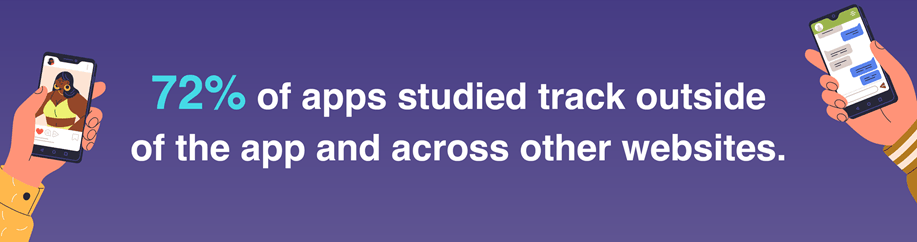
- 72% of AI apps track your data outside of the app and across other websites
- 36% of AI apps that track outside of the app also track multiple types of data
- Photo editors track the most types of data
- Identifiers are the most commonly tracked data type (64%)
Our findings revealed that 98% of AI apps link or track some form of data, with over a quarter (26%) tracking multiple types of data.
This tracking doesn't stop at the app itself – 72% of the 50 AI apps analysed track your data across other websites and platforms, meaning your information can be collected beyond your direct interaction with the AI tool.
Of these apps, 36% monitor multiple types of data, highlighting how much a single application can gather once permissions are granted.
AI apps collect data for several purposes, including training and improving their models, personalising user experiences and sharing it with advertisers.
While individual pieces of data may seem harmless in isolation, combining multiple types of data across platforms and websites can allow companies to tailor content, products or messaging based on information you may not have proactively consented to sharing.
Which types of data are most tracked across AI apps?
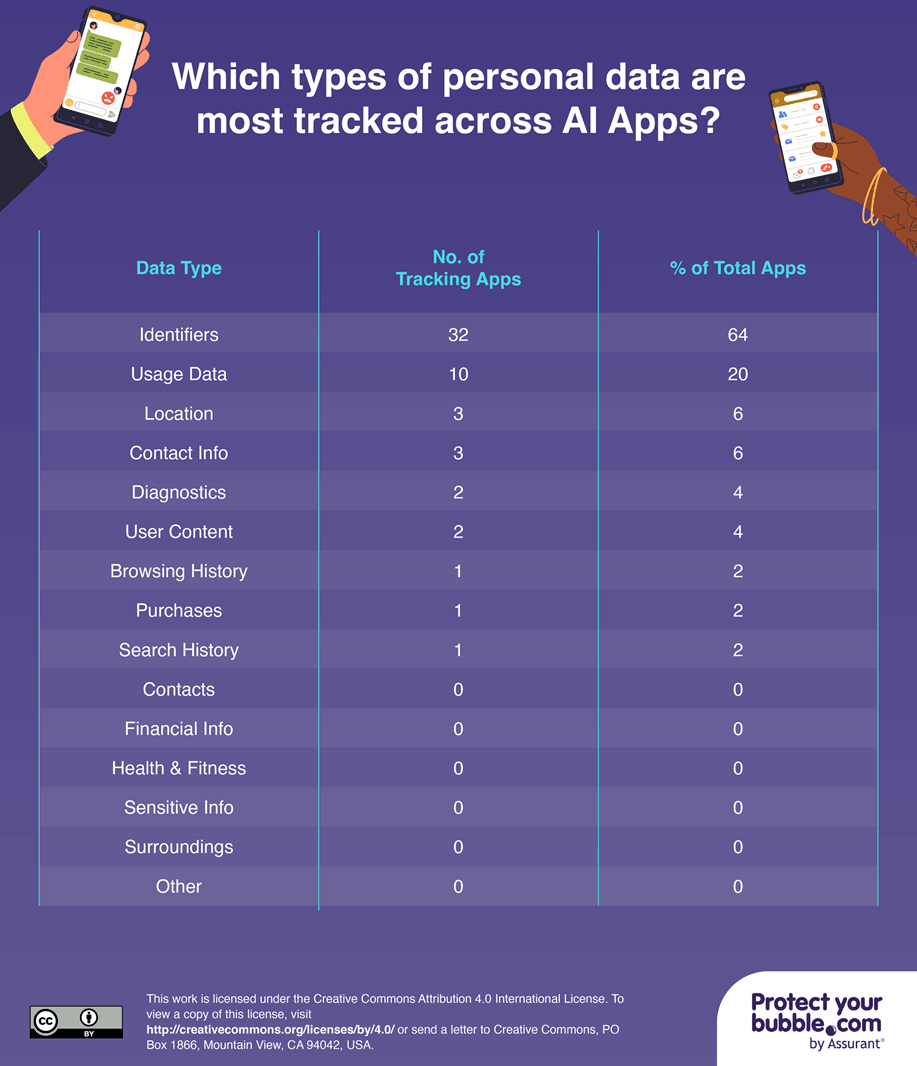
We found that identifier data is the most tracked, with 64% of AI apps monitoring this data type. This refers to any information that lets a company recognise you or your device, for example, your account ID, full name, IP address, cookies and more.
Identifier data enables these platforms to build detailed profiles of your identity, habits and digital patterns.
Usage data is tracked by one in five (20%) AI apps, making it the second most monitored data type. It reveals how you interact with a website or app, tracking click paths, session lengths and the features you use.
This can help AI tools improve the product or service, predict trends and deliver targeted ads.
Location and contact info data come in joint third, with 6% of apps monitoring information that identifies the geographical location of you or your device and profiling based on personal networks.
This lets companies tailor local advertising and track where their main customer base is located.
While AI apps collect many types of data, there are other types they seem to steer clear of. These include financial information, health and fitness, sensitive information and surroundings, with none of the apps examined tracking these data types.
These categories are often less accessible and less significant to AI tools. Health, finances and other sensitive information are also more heavily scrutinised under privacy laws, typically making them too high-risk to collect unless they're crucial to the app’s functionality.
Which AI app types track the most data?
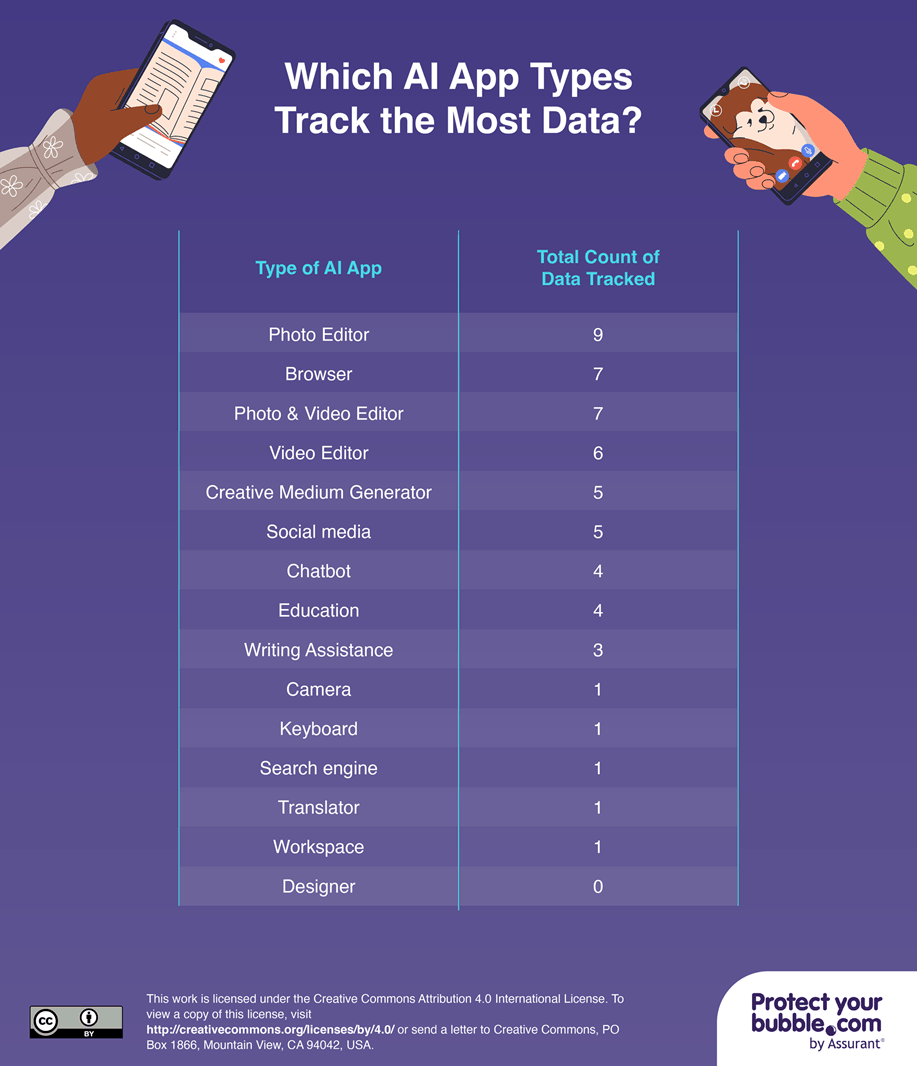
AI photo editors track more of your data than any other app type. Across those we examined, nine separate instances of data were being monitored.
Along the same lines, AI photo and video editors come second, tracking seven counts of data.
This is because photo and video apps have more data readily available – a single photo can carry details such as your location, the date and time it was taken and your device type all bundled into the file itself.
To power features like background removals or generative fills, the tool has to send your photos to the cloud, keeping user content and usage data to improve its AI model.
These apps also need identifiers and diagnostics to know which device is running the edit and to catch crashes, which are more likely with heavier AI tasks. A lot of these apps run on subscriptions and therefore also track your purchase history.
AI browsers share second place, with seven instances of data collection, including location, identifiers and search history.
Browsers have to read and interact with thousands of webpages, so they access identifier data, page content and even browsing activity to track your habits and behaviour over time.
Other creative AI tools track a wide range of data types too, including creative medium generators and social media.
Creative tools typically do more than one job – they store, generate and personalise content – whereas other AI app types such as translators, workspaces and keyboards often have a singular function and consequently require less data.
How to protect your data from AI apps
Almost every AI app tracks your data, but you still have control over what you share.
Below we've shared four useful ways to protect your privacy and keep control of your digital footprint.
The first step is to check what permissions you’re granting and opt out of anything unnecessary or unwanted. To do this, go to the app’s settings and look for the ‘improve the model’ option. Toggle this off to stop the app using your data for training.
While you might be tempted to upload an image of yourself to a photo editor or ask a chatbot for advice on a medical symptom, it’s important to consider what you share with AI apps. If it’s information you wouldn’t want in the public domain, don’t share it with an AI app.
These platforms can store your data and build a detailed profile of you. So just like your regular internet browser, remember to delete your search and chat history frequently.
You can also give away less of your data by using a pseudonym or setting up a second email address just for AI apps. These apps rarely require your real details to effectively fulfil their purpose, so using an alias means you don’t have to give away unnecessary identifiers.
Insure your devices with Protect Your Bubble
While it’s crucial to keep your data safe, protecting the device storing your data is equally important.
With Protect Your Bubble's phone and gadget insurance, you can protect the devices you depend on every day. We offer worldwide cover for accidental damage, mechanical breakdown and theft (optional).
Insure your gadgets now*, thank yourself later.
Methodology
For this study, we sourced data from the UK Apple App Store for a seed list of 50 popular AI apps.
We collected third-party advertising data from the data privacy section of the app description.
The counts have been calculated per app.
Sources:
- Seed list: https://a16z.com/100-gen-ai-apps-6/
- App Store: https://www.apple.com/uk/app-store/
* Underwriter Assurant General Insurance Limited. Gadget age restrictions, T&Cs and excesses apply. Customer UK 18+.